발효 · Fermentation5 minute read
On the patience of
fermented rice water.
Three days, two temperatures, one cuticle-flattening protein. The slowest step in the whole formula — and the reason Meori looks the way it does in the light.
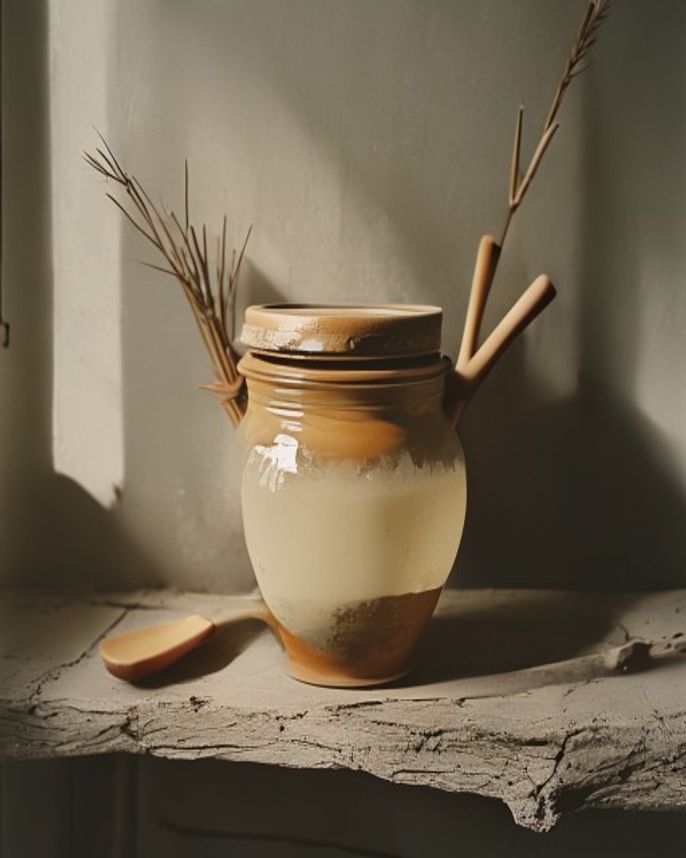
My grandmother kept a clay jar of rice water on the kitchen counter. She rinsed her hair in it before every dinner she hosted, which in her house meant most weeknights of my childhood. I never thought of it as beauty. I thought of it as housekeeping — something you did because it was already there.
Years later, in a chemistry lab in Seongsu, I watched a centrifuge pull apart a sample of that same liquid. The proteins that flatten the hair cuticle and reflect light in straight, even lines — they were sitting there, suspended, exactly where my grandmother had told me they would be. She called the result "유리결," literally "glass strand." We had a more clinical name for it on the bench, but hers was better.
The hard part is the patience. Fresh rice water is fine for rinsing — that’s what my grandmother did. But to get the proteins into a serum that survives sitting in a glass dropper for ninety days, you have to ferment. Three days, two carefully different temperatures, one specific strain of lactobacillus. We tested forty-seven variations of that exact step before we found the one that doesn’t change in the bottle.
“My grandmother called the result 유리결 — glass strand. We had a more clinical name for it on the bench, but hers was better.”
— From the March 12, 2026 Letter
It is the slowest part of the whole formula. It is also the reason Meori catches the light the way it does. There is no shortcut. We stopped looking for one in 2022.
— Ji-Won
Filed under
Ingredient
Related articles

Newsletter · 서신
Join the
quiet ritual.
Slow launches, ingredient notes, the occasional letter from Seoul. We send one email a month — never more, sometimes less.
We’ll never share your email. Unsubscribe any time.